
Fats - Eating them and Running Well
Fats are essential for healthy living. It is essential for the structure of our body tissues, hormone metabolism within the body and cushioning of organs and body parts. Without it we would soon perish.
However, a majority of the population are carrying too much fat to be able to run to their potential. Effectively they carry a dead weight around a race with them. Try running a mile carrying 10kg in a pack on your back and you'll soon realise how much you are being slowed down - not to mention the extra stress on your joints etc.
Elite runners will generally have body fat percentages of about 5-10% for males and 15-20% for females. If you fall below this level you are putting your health at risk and are at least borderline anorexic. This will not help you run fast and is referred to as RED-S (Relative Energy Deficiency in Sport) and if you are not careful osteoporosis can be a result, not just affecting your old age, but stopping you running completely.
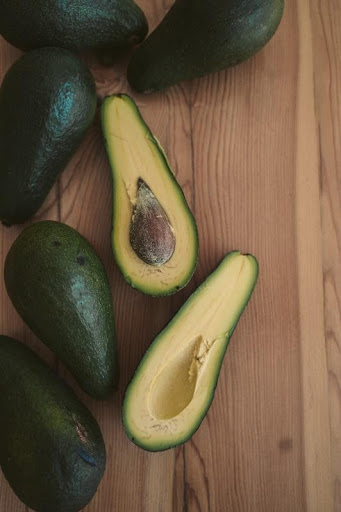
Photo Cut avocado
A common effect for women of very low body fat is that oestrogen is not produced / metabolised properly. This is causes bones to become brittle and can lead to fractures.
Our immune systems also rely on having fats to function properly - studies have been done which show impairment of immune functions in those with very low body fat percentages.
In terms of what to do in practice, the suggested amount of fat to have in your diet is 25%. This is in terms of calorific intake (not weight) as there are 9 calories in every gram of fat, roughly double that of proteins and carbohydrates.
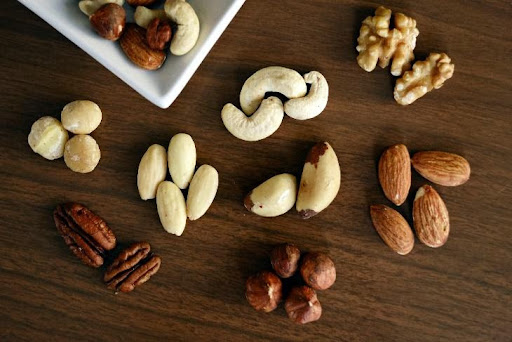
Photo Mixed nuts
Try to eat unsaturated fats where possible, as they are much healthier for us than saturated fats.
In terms of using fats from our fats stores - the general rule is that the slower you are running (or even walking) the greater the percentage of calories that are taken from our fat stores. At 50-60% of our maximum heart rates this is approximately 80%, which halves if your heart rate moves up to 80% of maximum. However, you will still burn significant fats in training even at higher speeds (and of course to run fast, you need to practice running fast).
Regular training will also improve your body’s ability to use fat as a fuel at higher exercise intensities, preserving your glycogen stores and allowing you to run faster for longer!
If you run hard for 2 hours or so, you'll use all your glycogen reserves up and be reliant purely on fat calories - this is when runners hit that wall in marathons, as the efficiency of fat burning is nowhere near as good as for carbohydrates.
The information here is written by an athletics coach who has read widely into the subject and not a sports nutritionist, so is about gearing your food and drink to the practicalities of running.