
Beginners Marathon Training Guide
In addition to the running that you are going to have to do in order to complete your first marathon....
Non Running Training
In addition to the running that you are going to have to do in order to complete your first marathon, it might be a good idea to include some other types of exercise, either to achieve specific goals (e.g. injury reduction) or to vary the training that you are doing.
The time on your feet running is far and away the most important part of training for any beginner attempting the marathon, but there are other forms of exercise that might help as well.
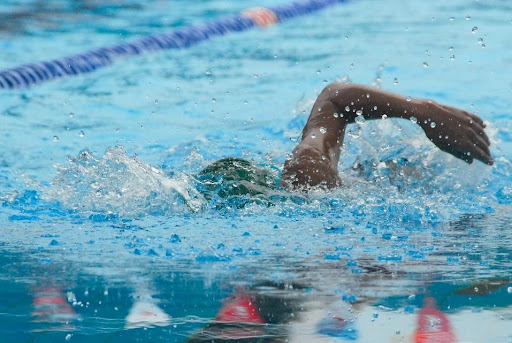
Photo Swimming
Cross Training
If you are susceptible to injury, or are not used to lots of running, it might be worth doing one of your aerobic (fitness) sessions as a cross training session, or if you feel good, putting some cross training in on your rest days from running. Cross training could include swimming, cycling or rowing and will improve your cardiovascular fitness without putting additional strain on your joints.
However, this has the disadvantage that you are not training your muscles specifically to run, but, the advantage of this is that they are not placed under undue stress, allowing them to recover between running sessions whilst still improving your aerobic fitness.
Circuits / Weights / Stretching
It might also be worth considering some other additional training, such as circuits, weights, core work or stretching as a stand alone session.

Photo Woman stretching
These are usually used by more advanced runners to reduce their times, but can also be very useful in helping beginners by reducing the risk of injury, particularly if you haven't exercised in a long time, or are not very flexible and have tight muscles.
We go into these types of training in more detail in other areas of the site.
It is only advisable to do these types of training if you are able to recover in time for your next running session, which as we stated earlier is the main way of ensuring your training for the marathon is successful.
As with the training, try to progress what you do here slowly, just building up gradually, so that you avoid the risk of overtraining injuries or illness as much as possible.
Remember, if this all seems a bit daunting, we can put together a schedule prepared specifically for you from our team of experienced coaches with our Online Coaching.